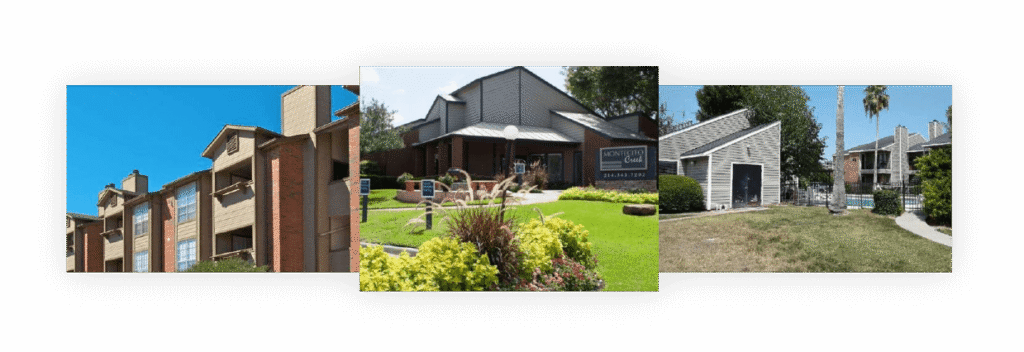
What Makes Investment Properties in Texas Attractive? Key Factors Investors Should Understand
Posted on 6 by Shravan Parsi

Finding attractive investment properties in Texas involves more than identifying a growing city or a property listed below market value. Investors need to evaluate location, rental demand, purchase price, operating expenses, property condition, financing, and potential risks before deciding whether a property fits their investment objectives.
Texas offers a diverse real estate landscape, from single-family rental homes and multifamily communities to commercial properties, mixed-use developments, and land for future development. However, not every property in a growing market represents a sound investment opportunity.
The key is understanding the numbers behind a property and the local conditions that could influence its performance over time.
This guide explains the factors investors should consider when evaluating investment properties in Texas and how to use those factors to make more informed real estate investment decisions.
1. Location and Local Market Fundamentals
Location is one of the first factors to evaluate when comparing investment properties in Texas. However, choosing a location requires more than looking at a city’s reputation or population growth.
Investors should examine the economic conditions, employment opportunities, infrastructure, housing demand, and development patterns within the specific market and neighborhood.
For example, Dallas–Fort Worth, Houston, Austin, and San Antonio each have different economic drivers, property types, development patterns, and operating conditions. Even within the same metropolitan area, two neighborhoods can offer substantially different investment profiles.
Before evaluating a property, consider:
Employment and economic activity: A diversified employment base may support demand from different tenant groups.
Population and household trends: Changes in household formation can influence demand for rental housing.
Infrastructure and accessibility: Transportation, major employment centers, schools, healthcare facilities, and essential services can influence a property’s appeal.
Neighborhood development: New businesses, public infrastructure, and nearby developments may affect future demand and competition.
Local supply: A large pipeline of new apartments, homes, or commercial space could create competition for existing properties.
Investors should use local data rather than assume that statewide growth translates into strong performance for every property.
A property in a stable neighborhood with dependable demand may be more suitable for a particular investment strategy than a property in a rapidly changing area with uncertain future occupancy.
2. Rental Demand and the Target Tenant
Strong rental demand is an important consideration for properties intended to generate rental income. Investors need to understand who is likely to occupy the property, what those tenants need, and how much they can reasonably afford to pay.
The answer depends on the property type.
For single-family rental homes, relevant factors may include household preferences, access to employment, local services, and the availability of competing rental homes.
For multifamily properties, investors should examine apartment demand, comparable rents, occupancy patterns, concessions offered by competing communities, and the supply of new units.
For commercial properties, tenant requirements may depend on business activity, location, accessibility, parking, visibility, and the suitability of the space for a particular use.
Useful questions include:
What tenant group is the property designed to serve?
What are comparable properties charging for rent?
How long do similar properties typically take to lease?
Are competing properties offering move-in incentives or rent concessions?
Is the property appropriate for the needs and budgets of likely tenants?
How much demand could be absorbed by new properties entering the market?
Advertised rental rates do not automatically represent achievable income. Investors should compare asking rents with actual leasing results where reliable data is available.
A property may look attractive based on its projected rent, but the investment case becomes less convincing if those estimates depend on consistently high occupancy or rental rates that nearby properties have not achieved.
3. Purchase Price and Comparable Property Analysis
A property’s asking price is not the same as its investment value.
An attractive acquisition generally requires a reasonable relationship between the purchase price, expected income, property condition, local comparable sales, and the risks involved.
Investors should review comparable properties with similar characteristics, including location, size, age, condition, occupancy, property type, and income potential.
For income-producing properties, comparing price alone is insufficient. A lower-priced property may generate less income, require extensive repairs, or face weaker tenant demand than a more expensive alternative.
A useful starting point is the capitalization rate, commonly called the cap rate.
Cap Rate = Net Operating Income ÷ Property Purchase Price × 100
Net operating income, or NOI, represents property income after operating expenses but before debt service and income taxes.
For example, consider a hypothetical property purchased for $1,000,000 that produces $70,000 in annual NOI.
Its cap rate would be:
$70,000 ÷ $1,000,000 × 100 = 7%
This calculation provides a starting point for evaluating income relative to price. It does not establish that the property is a good investment on its own.
Investors should compare cap rates only when the underlying income and expense calculations are reasonably consistent. They should also consider property condition, lease terms, location, capital needs, and market risks.
A higher cap rate may reflect higher operating risk, weaker demand, greater capital requirements, or other factors that deserve additional investigation.
4. Rental Income and Net Operating Income
Rental income is central to evaluating many investment properties in Texas, but projected rent alone does not show how much income a property may actually generate.
Investors should estimate effective gross income by accounting for potential rental income, other recurring property income, and expected vacancy or credit losses.
Effective Gross Income = Potential Rental Income + Other Income − Vacancy and Credit Losses
Operating expenses must then be deducted to calculate net operating income.
Typical operating expenses may include:
Property management fees
Routine maintenance and repairs
Property taxes
Insurance premiums
Utilities paid by the owner
Landscaping and common-area maintenance
Leasing and administrative costs
Other recurring property operating expenses
Net Operating Income = Effective Gross Income − Operating Expenses
Consider a hypothetical rental property with the following annual figures:
| Item | Annual amount |
|---|---|
| Potential rental and other income | $120,000 |
| Vacancy and credit losses | −$6,000 |
| Effective gross income | $114,000 |
| Operating expenses | −$44,000 |
| Net operating income | $70,000 |
In this example, the property generates $70,000 in NOI before mortgage payments, income taxes, and capital expenditures.
Investors should separately account for replacement reserves and major capital expenses, such as roof replacement, HVAC equipment, structural repairs, or significant building improvements. These costs can affect the actual cash available to owners.
The income estimate should also reflect realistic leasing assumptions. Using optimistic rent projections, minimal vacancy, or unusually low expense estimates can make a property appear more attractive than it is.
5. Property Taxes, Insurance, and Operating Costs in Texas
Operating costs can significantly influence the financial performance of investment properties in Texas. Investors should evaluate these expenses before making an offer rather than relying entirely on a seller’s historical figures.
Property taxes
Texas has no state-level property tax, but local taxing units set property tax rates and collect taxes to fund services such as schools, roads, and public safety. A property may be subject to taxes from several local taxing jurisdictions.
Investors should review the property’s current tax records, applicable tax rates, assessed or appraised value, and any relevant exemptions or special valuation arrangements.
They should also test how a change in taxable value or local tax rates could affect future operating costs.
Current property taxes may not represent the amount an investor will ultimately pay after an acquisition, so the underwriting should be based on a supportable estimate of future liability.
Insurance costs
Insurance premiums can vary according to location, property type, building characteristics, coverage limits, deductibles, and exposure to weather-related risks.
The Texas Department of Insurance publishes homeowners insurance information, including statewide and county-level data. However, residential homeowners insurance figures should not be used as a substitute for an actual quote on a commercial building or multifamily investment.
Before closing, investors should obtain appropriate insurance estimates for the specific property and review what is included in the proposed coverage.
Other operating expenses
Investors should also examine maintenance, utilities, property management, landscaping, security, repairs, and any association or shared-facility fees that apply.
For commercial properties and multifamily communities, the expense structure can be particularly important because ownership responsibilities, lease arrangements, common-area costs, and capital requirements may differ significantly.
A property is more attractive when its expected income remains adequate after realistic taxes, insurance, management, maintenance, and other operating expenses are included.
6. Property Condition and Future Capital Requirements
The physical condition of a property affects both its initial acquisition cost and the expenses required to maintain it.
A property that appears reasonably priced may require substantial investment after closing. These costs can reduce returns, delay leasing, and create additional financing needs.
During due diligence, investors should evaluate:
Roof condition and expected remaining useful life
HVAC systems and major mechanical equipment
Plumbing and electrical systems
Foundation and structural condition
Water intrusion, drainage, and moisture concerns
Building safety and applicable code requirements
Deferred maintenance and outstanding repairs
Accessibility and functional layout
Potential environmental concerns where relevant
The scope of the review should match the property type. A single-family rental home, an occupied apartment community, a retail building, and a development site each require different forms of investigation.
Investors should consider qualified inspections and specialist assessments where appropriate.
It is also important to distinguish routine maintenance from major capital expenditures. Routine repairs may be included in operating expenses, while significant replacements and improvements should be separately incorporated into the investment analysis.
The goal is to estimate the property’s realistic total cost of ownership, not simply its
7. Property Type and Investment Strategy
Different types of investment properties in Texas serve different objectives. The right choice depends on the investor’s capital, desired involvement, investment horizon, risk tolerance, and return expectations.
Single-family rental properties
Single-family homes may appeal to investors who want to own individual residential rental assets.
Important considerations include local tenant demand, property management, maintenance costs, achievable rents, and resale demand. Investors should also consider the financial impact of vacancy because an unoccupied single-family home may generate no rental income while ownership expenses continue.
Multifamily properties
Multifamily investments can provide income from multiple residential units within one property or community.
Evaluation should include occupancy, rent levels, tenant retention, operating expenses, property management, unit condition, and nearby apartment supply.
Although several units can diversify rental income within the same property, multifamily ownership still involves concentration risk, capital requirements, and exposure to local market conditions.
Commercial properties
Office, retail, industrial, and other commercial properties have different operating requirements and tenant profiles.
Investors should examine tenant credit quality, lease duration, renewal options, rent escalations, lease responsibilities, and the cost of attracting replacement tenants.
Property demand can also depend on industry trends and the suitability of the building for prospective occupants.
Mixed-use properties and development opportunities
Mixed-use projects combine uses such as residential, retail, or office space, potentially creating multiple income sources but also increasing operational complexity.
Land and development investments require additional attention to zoning, entitlements, infrastructure, construction costs, permitting, financing, development schedules, and potential changes in market demand.
Development assumptions are especially sensitive to delays and cost overruns. A projected future value should therefore be assessed alongside the resources and risks required to achieve it.
Investors comparing different investment opportunities in Texas should evaluate each opportunity against the same core objectives while accounting for the specific risks of its property type.
8. Financing, Cash Flow, and Return Expectations
Financing can change the financial outcome of a real estate investment, even when two properties have similar operating performance.
Investors should review the proposed loan amount, interest rate, loan term, amortization schedule, fees, refinancing assumptions, and any maturity or repayment requirements.
A property that generates positive NOI may still produce limited or negative cash flow after debt service.
One useful measure is the debt service coverage ratio, or DSCR.
DSCR = Net Operating Income ÷ Annual Debt Service
Suppose a property produces $70,000 in annual NOI and requires $50,000 in annual principal and interest payments.
The DSCR would be:
$70,000 ÷ $50,000 = 1.40
This means the property’s NOI is 1.40 times its annual debt service under these hypothetical assumptions.
A lender’s required DSCR can vary depending on the loan, lender, property type, and borrower. Investors should not assume that a particular ratio guarantees financing approval.
It is also important to test the property under less favorable conditions, such as lower occupancy, slower rent growth, higher insurance costs, unexpected repairs, or more expensive refinancing.
Investors evaluating returns may also calculate cash-on-cash return:
Cash-on-Cash Return = Annual Pre-Tax Cash Flow After Debt Service ÷ Total Cash Invested × 100
The calculation should use clearly defined cash flow and investment amounts, including relevant acquisition costs and additional capital contributed.
No single metric tells the entire story. Cap rate helps evaluate property income relative to price, DSCR measures income relative to debt service, and cash-on-cash return examines cash flow in relation to invested cash.
Together, these measures can help investors compare opportunities more consistently.
9. Market Supply, Competition, and Future Development
A growing market can attract investment capital and new development, but additional supply may also create competition for existing properties.
For rental housing, a significant number of new units may affect leasing time, occupancy, rental concessions, and achievable rents.
For commercial properties, new construction and changing business requirements may affect demand for particular locations or types of space.
Investors should therefore assess both demand and the capacity of the market to absorb new supply.
Before investing, research:
Existing properties competing for the same tenants
Planned or under-construction projects
Historical rent and occupancy trends
Recent leasing activity and concessions
Infrastructure projects and zoning changes
Local employment and business activity
The potential effect of new supply on the property’s tenant base
Future development can support a property’s appeal when it improves access, services, or economic activity. It can also weaken an investment case when competing supply grows faster than demand.
Investors should avoid relying entirely on forecasts or proposed developments. A project may be delayed, changed, or never completed, so the investment should be evaluated using assumptions that can be supported by available evidence.
10. Due Diligence and Risk Assessment
Before purchasing investment properties in Texas, investors should complete due diligence that covers the property’s physical condition, legal status, financial performance, and market position.
The exact requirements depend on the transaction, property type, financing arrangement, and applicable law, but several areas deserve particular attention.
- Financial review: Verify rent rolls, leases, operating statements, historical expenses, vacancy assumptions, outstanding receivables, and any seller-provided financial projections.
- Physical review: Inspect the building, identify deferred maintenance, estimate major repair costs, and investigate potential environmental or structural issues as appropriate.
- Legal and title review: Examine ownership records, title matters, easements, restrictions, leases, zoning, permitted use, and other relevant documents with qualified professionals.
- Market review: Compare rental rates, occupancy, comparable sales, local competition, and available market data.
- Financing review: Confirm loan terms, required equity, fees, covenants, debt service obligations, and potential refinancing risks.
- Exit strategy: Consider potential future buyers, likely selling costs, market liquidity, and the circumstances under which the investment might need to be sold.
Investors should also conduct downside analysis. For example, how would the investment perform if leasing took longer than expected, insurance costs increased, or the property required an unplanned capital improvement?
A property does not need to be free from risk to be investable. However, the risks should be understood, reflected in the financial analysis, and consistent with the investor’s objectives.
A Practical Checklist for Evaluating Investment Properties in Texas
Before moving forward with a potential acquisition, use this checklist to organize the initial evaluation.
| Evaluation factor | What to review |
|---|---|
| Location | Employment, accessibility, neighborhood conditions, and market fundamentals |
| Tenant demand | Target tenants, comparable rents, vacancy, and competing properties |
| Purchase price | Comparable sales, valuation assumptions, and acquisition costs |
| Property income | Realistic rent, vacancy, other income, and collection assumptions |
| Operating expenses | Taxes, insurance, management, utilities, and maintenance |
| Property condition | Inspections, deferred maintenance, and future capital requirements |
| Investment strategy | Property type, ownership responsibilities, and holding period |
| Financing | Loan terms, debt service, DSCR, and refinancing exposure |
| Market competition | Existing inventory, planned supply, and tenant alternatives |
| Due diligence | Financial records, title, leases, zoning, physical condition, and legal review |
| Downside scenarios | Lower income, higher costs, delays, and unexpected repairs |
| Exit considerations | Resale demand, selling costs, and potential liquidity constraints |
This checklist can help investors identify information gaps before committing significant capital. It is a starting point for analysis, not a substitute for property-specific financial, legal, tax, or technical advice.
Frequently Asked Questions
What makes investment properties in Texas attractive?
Investment properties in Texas may be attractive when local demand, purchase price, income potential, operating expenses, property condition, and risk align with an investor’s objectives.
Which Texas markets should real estate investors research?
Investors can compare markets such as Dallas–Fort Worth, Houston, Austin, and San Antonio, while examining neighborhood-level demand, competing supply, prices, and operating costs rather than assuming one city is suitable for every strategy.
How do investors evaluate the income potential of a Texas property?
Investors typically review effective gross income, operating expenses, net operating income, cap rate, debt service coverage, and projected cash flow using supportable assumptions.
Are lower-priced investment properties in Texas better opportunities?
A lower purchase price does not automatically make a property attractive because weak rental demand, deferred maintenance, high expenses, or significant risks can outweigh the apparent savings.
Why should investors pay attention to property taxes in Texas?
Local property taxes can materially affect a property’s operating expenses, so investors should review the applicable taxing jurisdictions, current records, and a realistic estimate of future tax liability.
What due diligence should investors complete before buying a property in Texas?
Investors should review financial records, leases, property condition, title matters, zoning and permitted use, financing terms, market competition, and potential future capital requirements.
Can a property in a fast-growing Texas market still be a poor investment?
Yes, because purchase price, operating costs, excessive new supply, weak property-level demand, or unrealistic financial projections can undermine an investment even in a growing market.
Final Thoughts
Evaluating investment properties in Texas requires a disciplined approach that connects local market conditions with the financial and physical characteristics of the property itself.
Investors should look beyond population growth, asking prices, and projected rental income to understand what supports demand, how much income the property can realistically generate, what it will cost to operate, and which risks could affect future performance.
The strongest investment candidates are not necessarily the newest properties, the cheapest acquisitions, or the assets with the highest projected returns. They are the properties whose assumptions can be supported by evidence and whose potential performance aligns with the investor’s strategy, capital, and risk tolerance.
By evaluating location, tenant demand, valuation, operating costs, financing, property condition, and due diligence together, investors can make more informed comparisons and assess investment opportunities in Texas with greater clarity.
Disclaimer: This article is for educational and informational purposes only and does not constitute financial, legal, tax, or investment advice. Real estate investments involve risk, and outcomes depend on property-specific, financing, and market conditions.
Take My Assessment
Are You Ready to Invest or is Your Real Estate
Philosophy More Art than Science?